
ASSERTION
The atomic unit of truth: an immutable claim with four time axes, confidence, reliability, and origin.
OVERVIEW
Modern systems speak dozens of data standards. Each handles syntax and transport; none of them share a common understanding of meaning. MILENKO is an open, canonical ontology that sits above existing standards and maps each one — through governed, testable mapping specifications — onto a single semantic model, so fusion, AI/ML, and coalition systems can finally agree on what the data means.
Truth as evidence, not state. And unlike conventional data models, MILENKO never stores "the current picture" at all — it records evidence, and computes the picture from it. Here's why that changes everything.
WHY IT MATTERS
Most systems model the world as current state — a record that says "Track X is at this position, right now." When new data arrives, it overwrites the old value. That's a whiteboard: erase the last position, write the new one. You only ever see the latest number — and you've thrown away who reported it, when, how confident they were, and whether anyone disagreed.
MILENKO models the world as a stream of assertions — "Sensor S claims that at time T, Track X was observed at position Y, with this confidence, from this origin." Nothing is ever overwritten. Every claim is a timestamped, attributed entry, kept forever. That's a ledger: to answer "where is X now?", you don't read a stored value — you replay the evidence and compute it.
The whiteboard remembers only the latest value. The ledger remembers everything — and that is exactly what a multi-sensor, self-learning, must-be-auditable system needs.
THE ASSERTION MODEL
The atomic unit of truth: an immutable claim with four time axes, confidence, reliability, and origin.
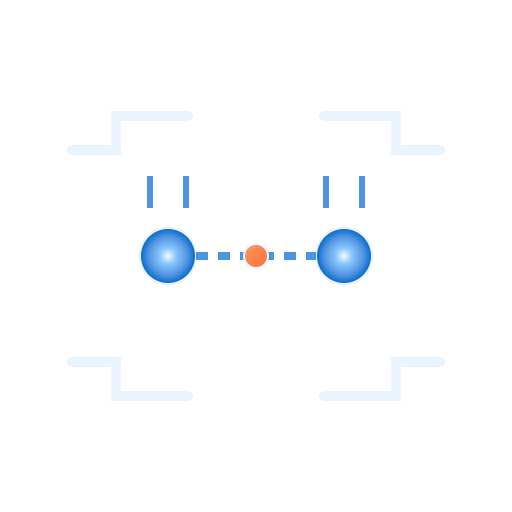
Producer-local identity — no forced global IDs, so coalition data can merge and safely un-merge.

Policy beyond classification: markings, releasability, privacy, use rights, and assurance on every claim.
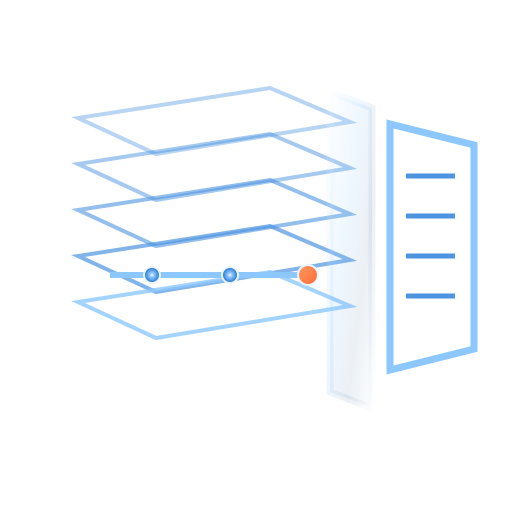
Deterministic, versioned views over the evidence — tracks and pictures become reproducible caches.
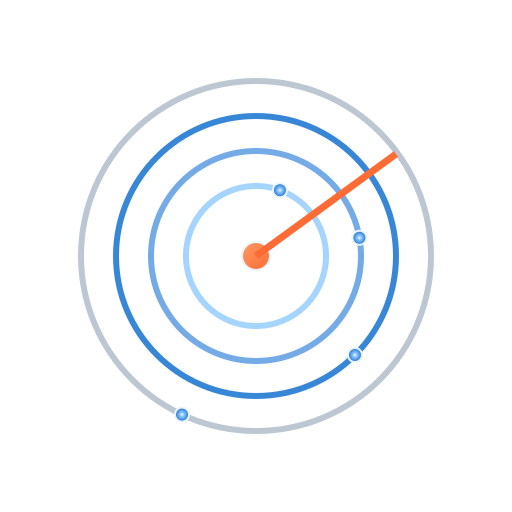
Bitemporal by design: when it happened, when it was measured, when it held, and when we knew.
Claims about the world and authority to act stay separate primitives — auditable, append-only, never confused.
SPECIFICATIONS
| Model | Append-only assertion spine; four-layer ontology (Physical → Observation → Entity → Intent & Behavior) grounded in the full EM spectrum plus acoustic, particle, field, mechanical, chemical/biological, GNSS, and time/frequency phenomenology |
|---|---|
| Time model | Bitemporal, four axes per claim: phenomenon time, result time, valid time, recorded time |
| Identity | Producer-local references with retractable equivalence assertions — no stored global merged IDs |
| Policy | Per-claim policy envelope: classification, structured markings, releasability, privacy constraints, use rights, assurance |
| Schema expressions | Protobuf v3 (gRPC/NATS) · FlatBuffers (embedded/RTOS) · DDS IDL (avionics/ROS 2) · OWL/RDF (semantic web, NIEM, JSON-LD) |
| SDK languages | Go · Python · Rust · TypeScript · C · C# |
| Standards coverage | 100+ governed mapping specifications ("splices") spanning DoD/NATO C2 (CoT/TAK, Link 16, VMF, JREAP, STANAGs, SAPIENT), aviation & maritime (ADS-B, AIS, ASTERIX, ACARS), UAS & robotics (MAVLink, DroneCAN, ROS 1/2, JAUS), cyber threat intel (STIX, MISP, TAXII), industrial (Modbus, OPC UA, BACnet), IoT (Matter, Zigbee, LoRaWAN), geospatial & weather (GRIB2, BUFR, GeoPackage), simulation (DIS, HLA), and medical (HL7 FHIR, DICOM) |
| Conformance | Executed test vectors and round-trip parity requirements per standard; deterministic projection conformance corpus |
| Governance | Open specification with formal decision records, compatibility policy, and versioned releases |
Specification documents, schema references, and integration guides are available on request.